Monday, 7 August 2017

Toronto man describes harrowing detainment and deportation from Kenya

Toronto man describes harrowing detainment and deportation from Kenya

Andreas Katsouris was in Nairobi Kenya working on the presidential opposition campaign when a dinner outing turned into a tense detainment and deportation.

Andreas Katsouris and his wife Jennifer Bell.
Andreas Katsouris and his wife Jennifer Bell.  (JENNIFER MARY BELL)  

A dinner outing turned into a scene from an action movie on Friday night when Toronto man Andreas Katsouris was swarmed in a Nairobi street by men who detained him, took his cell phones and demanded he take them to a colleague.

“I was on my way to dinner on Friday night when five or six tough looking guys wearing street clothes surrounded me, and then pretty soon there were a dozen of them,” Katsouris said.

“I saw one of their cell phones and there was a photo of me on it. They said they had been looking for me.”

The men, who identified themselves as police, asked Katsouris to bring them to his American co-worker, John Aristotle Phillips.

He was given only a few minutes to call his wife before his two phones and laptop were taken from him, he told the Star over the phone, from Delft, Netherlands where he has since been reunited with his wife and daughter.

Article Continued Below

When the officers arrived at Katsouris’ apartment, they asked him and Phillips to pack their bags. He said when they both protested the officers became aggressive and began pushing and shoving them.

Phillips was then handcuffed.

“One guy also grabbed the glasses off my face. I’m pretty much blind without my glasses, and then I was like ‘OK we don’t have to do things this way,’ and then he put them back on.”

The officers also denied Katsouris and Phillips the chance to contact lawyers or access to consular assistance, he said. Representatives for the Kenyan government did not immediately respond to Canadian Press requests for comment.

Katsouris, who had been working on the opposition campaign for Kenya’s presidential election when he was apprehended, packed his belongings and got into the officers’ vehicle. He said Phillips later told him he was put into the back of another car with a man holding a “large machine gun.” Phillips’s handcuffs were later removed.

The officers would not answer Katsouris’ questions about where they were going or why they were being held.

“I’m sitting in the car with four or five guys, and two of them are sitting on either side of me and it is pitch black outside. In terms of kidnapping and if I was going to be killed, it definitely crossed my mind,” he said.

After about a half an hour of driving, Katsouris said the tension eased. Five hours later he was at the airport, where he and Phillips were brought into a room and told they were being deported because of a violation of their visas.

Katsouris said officers produced no documentation to justify his detention.

He was put on a connecting flight to Toronto, which first stopped at Frankfurt Airport, where he then took a train to Delft.

“It was 23 hours of boredom and about an hour of fear,” he said.

Katsouris said he and Phillips both had tourist visas, which are not sufficient for their employment in Kenya, but he believes the deportation was political. Katsouris is senior vice-president of global services at Aristotle Inc., a political consulting firm that provides various services to campaigns, including strategy and data analysis. Phillips is the company’s CEO.

Katsouris said he saw multiple reports from Kenyan media that a polling station from his opposition campaign was vandalized while he was detained.

“I saw a smashed up office. And there were multiple eye-witnesses that said computers were broken and some of them stolen.”

James Orengo, a senior member of the opposition National Super Alliance, told The Associated Press that the detention of Katsouris and Phillips happened around the same time that armed and masked police raided an opposition vote-counting centre, intimidating workers and seizing equipment.

Kenyan police denied allegations that officers broke into political party offices on Friday, saying no report of a burglary has been made to any police station.

The lead-up to Tuesday’s election has been contentious.

President Uhuru Kenyatta, the son of Kenya’s first president, is up against longtime opposition leader Odinga, the son of the country’s first vice-president.

Katsouris and Phillips have been in Nairobi since June assisting opposition candidate Odinga. They also became involved in the election because they believed it had the potential for irregularities.

Odinga has run unsuccessfully in three previous elections.

Katsouris said before he was deported his two phones, one Canadian and the other he got in Kenya, along with his company laptop, were taken by the officers. He said he saw them reading his messages and emails that were between other campaign employees.

The phones were given back to him, but the Kenyan phone was returned without a SIM card.

Kenyan officials also kept his company laptop, which contains emails and documents from the opposition campaign.

“It’s completely inappropriate for a supposed democratic election,” said Katsouris.

For now he will be spending time with his wife, Jennifer Mary Bell, and his 14-year-old daughter, who wasn’t aware of the situation until her father surprised her in Delft.

“I made the decision not to tell her even though she’s old enough to understand. But I didn’t want to tell her anything that I didn’t know for sure,” Bell said.

Bell said when she got the call from her husband she remained calm and tried to think rationally. “This kind of thing is always a possibility with his kind of work.”

She then contacted her MP Nathaniel Erskine-Smith and global affairs officials who assisted with the deportation process.

The family will be returning to their home in Toronto on Saturday.

With files from the Canadian Press and the Associated Press

Sunday, 6 August 2017

‘We are treated like sporting slaves’: Ethiopian lifts lid on trade in athletes


Lily Abdullayeva


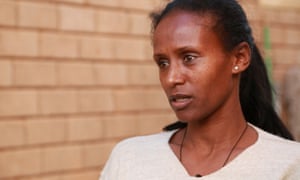
Lily Abdullayeva, who says she had prize money stolen and was tricked into taking drugs after moving to Azerbaijan, reveals the dark side of athletics where African runners are bought by richer nations and exploited

Part 2: Inside the doping hotspot of Ethiopia: dodgy testing and EPO over the counter

The smell of fish stew pervades Lily Abdullayeva’s house, a 40-minute drive from central Addis Ababa, past a throng of roadside villages of colourful ramshackle huts where legs of beef hang from corrugated iron roofs and children in Manchester United shirts play barefoot.

A modest but smart brick building, it is shielded by rusty gates, beyond which several cows graze on a thirsty patch of grass. In the back room her mother-in-law lays on a mattress on the floor with Beheyaw, Lily’s 13-month-old son, snoozing beside her.

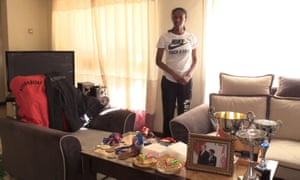
It is a typical scene of middle-class life in the Ethiopian capital but the clank of medals Lily is emptying from a tote bag on to a coffee table are the start of a different story. She offers a window into the dark side of elite athletics where African runners are bought by rich Arab and Middle Eastern nations, some to be cast aside when they are no longer winning. “We are treated like sporting slaves,” says Lily.

Advertisement

There are dozens of medals, including a few from her junior career when she was one of Ethiopia’s brightest middle-distance running talents. It was in 2009 that Lily, now 26, was first spotted at her local club in Addis Ababa by a Turkish coach who persuaded her to switch allegiance to Azerbaijan.

“They promised me a good salary, a house and expensive cars if I won races,” she says. “But I never received any. I had my prize money stolen, was tricked into taking drugs and I would advise against anyone doing it.”

Lily is not the only athlete to change nationality. On a single day last year – before the Rio Olympics – the IAAF, athletics’ world governing body, had 25 applications to switch allegiance. Many of these were for no obvious reason, beyond a cynical attempt by oil-rich nations like Qatar, Bahrain and Azerbaijan to increase their chances of winning medals on the world stage.

At the European championships in Amsterdam last summer, Turkey had its most successful performance, winning 12 medals, six of those claimed by former Kenyan athletes. Kazakhstan is expected to follow suit with many African-born athletes thought to be making their debut for the country at the world championships in London which start on Friday.

But a joint investigation by the Guardian, the German broadcaster ARD and Holland Media Combination has found that some of these athletes competing under a flag of convenience are routinely mistreated, denied prize money and sometimes housed in filthy conditions.

Lily Abdullayeva
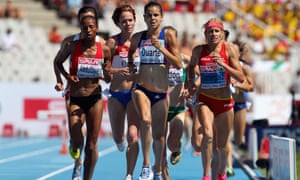
 Lily Abdullayeva competes for Azerbaijan in the 3,000m steeplechase at the 2010 European championships in Barcelona. Photograph: Michael Steele/Getty Images

Lily, who was known as Layes while competing for Azerbaijan, claims she was promised $300 a month, rising to $1,000 if she had a good result. In her first few months, she became a European junior silver medallist but the money did not materialise and she was receiving only $150 a month.

Advertisement

“After eight months I asked my coach why I was not being paid the $1,000 and threatened to ask the president of the federation where my money was,” she says. “As soon as I said that, he gave me money from his own pocket there and then. It turned out he had been keeping it himself from the third month.”

Lily continued to succeed, promoting the interests of the Azerbaijani government, which has tried to put itself on the sporting map in recent years by hosting the inaugural European Games and a Formula One grand prix. She rifles through a photo album, stopping on a picture showing her running alongside the British athlete Helen Clitheroe on her way to winning 3,000m bronze at the European Indoor Championships in Paris in 2011. But it was a burning desire to succeed at London 2012 that Lily says made her coaches begin to ply her with drugs.

“At the Stockholm Diamond League in 2011 I was injured but was ordered to compete anyway,” she says. “After warming up my coach Mitin Sesak came up to me and said: ‘Lily open your mouth.’ He put one tablet on my tongue and I swallowed. Finally I had the courage to ask what he was giving to me and he said: ‘It can help you if you are scared or have fear, you can be strong.’

Advertisement

“But he got distracted and forgot he left the packet with me. I read it and it said ‘tribulus testosterone’. I went on the internet to check the side effects and one said infertility. When I saw that information I was very angry. I was fighting to have a better life but not to have any problems in the future with conceiving. But they didn’t care.

“I was at a training camp in Georgia and Mitin gave me some injections. He said he was giving me small injections, not the big ones, yet. His target was the Olympics and world championships. He didn’t want us to have very good results before then because the government would not be feeling as happy if we get medals at the Olympics so he saved the stronger stuff.”

Sesak is now serving a lifetime ban from athletics as a result of a case brought by Turkish anti-doping authorities.

Lily tugs at the bottom of her Minnie Mouse sweatshirt and shakes her head as she recalls leaving Azerbaijan after four years representing them. In 2013 she had been given $25,000 by the government for winning a race but claims the Azerbaijan Athletics Federation president took $7,000 of that money and also refused to continue paying her salary.

“He promised to send the rest of the prize money to me when I was back in Ethiopia but never did,” she says.

Lily Abdullayeva
 Back home in Addis Ababa, Lily Abdullayeva displays her athletics trophies and medals. Photograph: ARD

In a statement responding to the allegations, the Azerbaijan Athletics Federation says: “It is true that Ms L Abdullayeva has indeed competed as an athlete in Azerbaijan during the period of 2009-13. However, it should be pointed out that she had not entered into any contractual arrangement with the Azerbaijan Athletics Federation.” It adds that she was competing for an individual sports club and that “she has received all due prize money. The Federation refutes her allegations as baseless that she is still somehow due some prize money.

Advertisement

“As to her claims about drugs … she has been subjected to due drug/doping control procedures like other athletes by the European and other anti-doping agencies and they have all proved negative.

“We find it totally unacceptable that she continues to direct allegations aimed at damaging the reputation of the athletics federation and her former coaches.”

It is not only Azerbaijan that is trading in athletes. Every Olympic medal ever won by Bahrain has been by an athlete born in Africa. Ruth Jebet, a 20-year-old from Kenya, claimed the country’s first ever Olympic gold in the 3,000m steeplechase in Rio last summer while Eunice Kirwa, also from Kenya, won silver in the marathon.

Leonard Mucheru, a Kenyan distance runner, moved to Bahrain in 2003. The attractions were manifold, not least because it is so difficult to get in the Kenyan national team, which has a proliferation of world-class runners. But Mucheru says he quickly realised the promises he had been made when he agreed to switch allegiance were not going to be honoured.

“I began to feel like a slave,” he says. “When we got to Bahrain we realised that these guys could not allow you to go in a shop, to go to an entertainment joint. They would take your passport. I told them no because I need it to send money to my family back home. But they said I wasn’t allowed to leave the hotel room anyway.

“They promised that once we changed citizenship we would get a contract but we never signed anything so there was nothing binding and no regulations. I got injured in 2006 and went a full year without being paid by the Bahrain Athletics Federation.”

Bahrain rejects Mucheru’s allegations and says that no official complaint was ever lodged.

The Professional Athletics Association of Kenya, which represents athletes and coaches, produced a report last year presented to the country’s sports ministry alleging corruption in Athletics Kenya, the governing body.

The report, seen by the Guardian and ARD, is written by the organising secretary, Julius Ndegwa, and says: “On athletes changing nationality to compete for other countries our client alleges that Athletics Kenya officials conspire with officials from the said nations to ‘sell’ an athlete at a negotiable price depending on how rich an athlete is and how productive the athlete is.”

Advertisement

Mucheru believes a lack of education for young African athletes often leads to them being exploited. “There is a huge problem with agents who take advantage of athletes who are very young and often not very well educated,” he says. “A lot of them who are promised to get a chance to go to Europe do not think about the contract, they just go.

“I think the IAAF are to blame as well as the individual federations because they did not have tight enough regulations. I think we need a strong world governing body which will educate the athletes and fill those holes where [people] can manipulate the athletes, abuse them and take their money illegally.”

In February the IAAF said it was putting an immediate stop to changes of nationality by athletes, agreeing the system had become open to abuse and rules were being manipulated.

The organisation’s president, Sebastian Coe, said a working group would be set up to agree new rules by the end of the year. Lord Coe admitted that previous regimes at the International Association of Athletics Federations may have failed to grasp the seriousness of the issue.

“It had got out of hand,” he says. “On a single day in the buildup to Rio we had 25 or 26 applications to switch nationalities. Some of those would have been for legitimate reasons but clearly it was a problem.

“Athletes are not tradable commodities. They are human beings and we want the best athletes of their generation competing and showcasing our sport. We don’t want a sport where they are being traded in the dark. That is clearly not something I would condone.”

For Lily, it may be too late. An injury to her heel was exacerbated by training in freezing conditions at a training camp in Belarus, where it was so cold car engines would not start and schools were closed.

She has now switched allegiance back to Ethiopia and has returned to training following the birth of her first child but her chance of running for the country she loves is probably gone.

“I tried my best for Azerbaijan,” she says. “I trained hard and ran well but in the end they treated me like rubbish.”

Saturday, 5 August 2017

A Wake Up Call – There Are No Successful Black Nations


And the indignity and helplessness of blacks in America won’t end until we have a first-world African nation to lift up our people.

In the wake of fresh deaths at the hands of police officers in the world’s greatest nation, we, the people of the black race, are once again the object of renewed worldwide attention.

Questions of injustice in the United States have been duly raised and protested. And, once again, the black cultural elites in America have seized various platforms to air their grievances and are mostly — and rightly — talking about racism, discrimination, racial profiling, and hate, among other issues. But one issue that has hardly been talked about is the core reason why black people have remained synonymous with the denigrating experience of racism. It is, I dare say, because of the worldwide indignity of the black race.

Racism is not limited to the United States. There is no nonblack nation, even among the most liberal ones, where the black man is dignified. History dealt us an unforgiving blow in the incursion of foreigners into black lands. The Arabs enslaved tribes and nations and then colonized and evangelized them. Then came the Europeans, who persuaded the Africans were of an inferior race, divided up the continent over lunch in Berlin in 1884. They carted off a large population of its people — sometimes leaving entire villages almost empty — and brought those who remained on the continent under their rule.

So complete was the transformation that no black nation retained its ancestral nationhood, the national language, or national identity. And today we often hear of how China or India or some other nation is “taking over” Africa economically. There is almost no nation whose majority is of a different race that has not spat on the face of the black person, at one time or the other.

Be assured, the indignity will continue. Black elites and activists across the world have adopted a culture of verbal tyranny in which they shut down any effort to reason or criticize us or black-majority nations by labeling such attempts as “racism” or “hate speech.” Thus, one can be certain that any suggestions that our race may indeed need to do something to remedy our situation will not be aired — not by the terrified people of other races. And anyone within our race who makes such a suggestion will be deemed weak and pandering or a sellout, as U.S. President Barack Obama has been repeatedly called. Thus, no one will talk about the painful fact that most African and Caribbean nations have either failed or are about to collapse.Thus, no one will talk about the painful fact that most African and Caribbean nations have either failed or are about to collapse.

Early African-American intellectuals and cultural elites saw that the future of their race could not be advanced by endless protests or marches of “equality” or “justice.” It could only be done through the restoration of the trampled dignity of the black man. Great men like Marcus Garvey, W. E. B. Du Bois, and Malcolm X all knew that a people are only respected when it has a nation worthy of respect. A man who lives in a shack cannot expect to be treated with respect at a palace.

They knew that for us to reclaim power we must first reclaim dignity and that this comes through the construction of a solid black state with a demonstrable level of development and prosperity — and which can stand as a powerful advocate for the global black.

Today, no such state exists.

Nigeria, the most populous black nation on Earth, is on the brink of collapse. The machinery that make a nation exist, let alone succeeds, have all eroded. One might argue that the nation’s creation by self-seeking white imperialists engendered its failure from the beginning, as I did in my recent novel. But this is only a part of the cause. A culture of incompetence, endemic corruption, dignified ineptitude, and, chief among all, destructive selfishness and greed has played a major role in its unravelling. The same, sadly, can be said for most other African nations. States like Zimbabwe, Cameroon, and Equatorial Guinea are farcical democracies ruled by men who exclusively cater to their interests and those of their clipped circles.

Thus, it is no surprise that in the absence of any healthy black nation — in the midst of chaos, senseless wars, corrupted religiosity, violence, and economic collapse — African and Caribbean people leave home en masse. 

They beg on the streets of Greece, a prostitute in the red-light zones of the Netherlands, and make up 40 percent of the migrants flocking to Europe. As they turn up in these countries, helpless, unwanted, starved, or maimed, they are treated like dogs. Last month in Italy, a newly married Nigerian man was murdered simply for being unwanted. Everywhere from Ukraine to India, nearly every day, black indignity, black helplessness, stares us in the face. And all we do, we who hold the platform can do, is scream “racism!” and court the sympathy of others.

The Yoruba say, “Eniyan bi aparo ni omo araye n’fe,” meaning the world loves a person who is like a partridge. The partridge is a poor bird that, enfeebled by its creation, has little ability to hunt, gather, protect, or feed itself. The Yoruba believe that the world loves these birds because they provide the space for people to show both sincere and insincere sympathy while holding firm to their position as the superior and maintaining the place of the partridge as the weak. Which is to say that if the partridge relies on the sympathy of others, it will not elevate its position. If we, black people everywhere, cannot gather the resources within our powers to exert real changes and restore our dignity, we will continue to be seen as weak. Our protestations and grievances will be met with sympathy, which does nothing to inspire respect.

Black elites should allow for self-criticism and soul-searching and for the restoration of the Pan-Africanist movement with an eye toward building sustainable black nations. We must come to realize that to a great extent the fate of the black man in America is inextricably linked to that of his brother in Africa. Although largely unacknowledged in American political discourse, Jim Crow ended in part because of the African Independent movements.

Jaja Nwachukwu, a 1960s-era Nigerian foreign minister and avowed Pan-Africanist who was close friends with American Presidents Dwight Eisenhower and Lyndon Johnson, once recalled how American officials were embarrassed when African ministers attended official events in New York’s U.N. headquarters and were treated with honour as representatives of sovereign countries. They were ashamed, for instance, when American blacks could not use the same bathroom as the Africans, just as black. The American blacks were further empowered when African nations started becoming independent, black-governed nation-states, beginning with Ghana in 1957 and followed shortly afterwards by other African nations.

As long as we continue to ignore Africa’s continuous wallowing in senseless poverty and destructive failures, as long as the Congolese or the Haitian remains the poster child for poverty and lack, we will remain undignified. As long as we continue to ignore our own self-assessment and soul-searching, we will remain the undignified race. Sadig Rasheed, one of the leading African politicians of the 1980s, once told Polish journalist Ryszard Kapuscinski: “I worry about whether African societies will be able to assume a self-critical stance, and much depends on this.” I add: Our dignity — and even survival — will depend on this.